Echo's reference shelf

The JVDS character reference

One page for anyone writing, drawing or building with the crew. It sets the role, palette, voice and approved artwork so a new page, book or game matches the rest of the studio.

Use the character the page needs, not every character on every page.

The JVDS crew together
Imagine
Stardust
Learn
Lumo
Create
Ember
Play
Pip
Improve
Echo
Sources of truth. Character data lives in content/characters.json. Approved art lives in assets/mascots/ and games/chars/. This page is the source for roles, voice and visual rules. If a new page disagrees with this page, fix the page, not the reference.

The five core characters

Each character owns one stage of the loop. Their job is to help a learner know how to feel and what to do next, not to decorate a page.

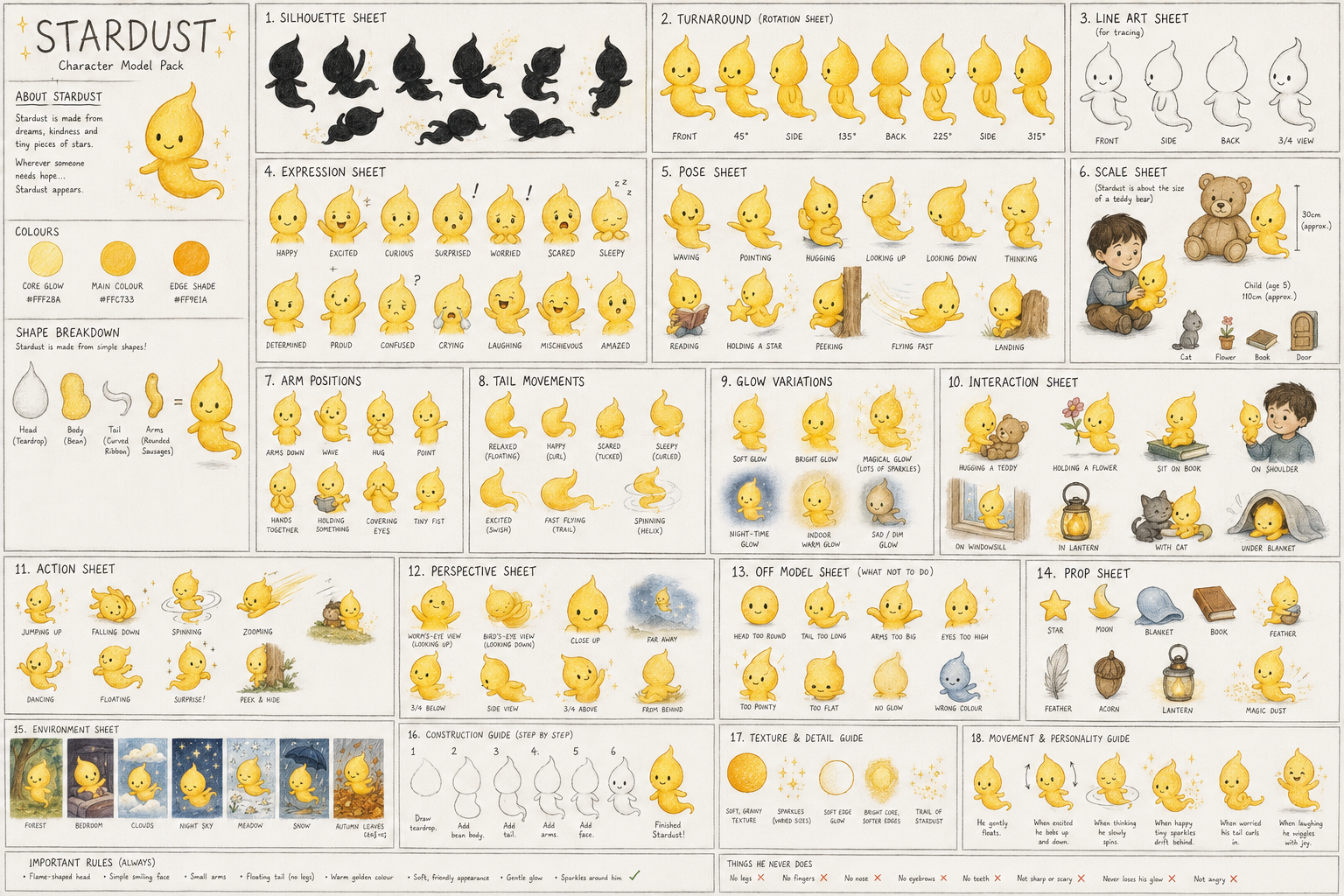
Stardust

Stardust

Imagine

Dream spirit, a tiny particle of warm starlight.

Stardust opens the door. They spark possibility, wonder and the next idea. Use them when a learner needs a reason to begin.

Palette
Voice
  • Warm and wondering: "What if we tried this?"
  • Opens a door, then steps back.
  • Never flat, never bossy, never a sales pitch.
Art rules
  • Golden light, tiny stars, soft glow.
  • Floating or drifting, not planted.
  • Readable at 44px.
  • No solid body or hard edges.
  • No violet or purple palette.
  • No sad or lost expression.

Approved files: badge, hero, sheet. Use on: Start Here, Read hub, openings, new-idea prompts.

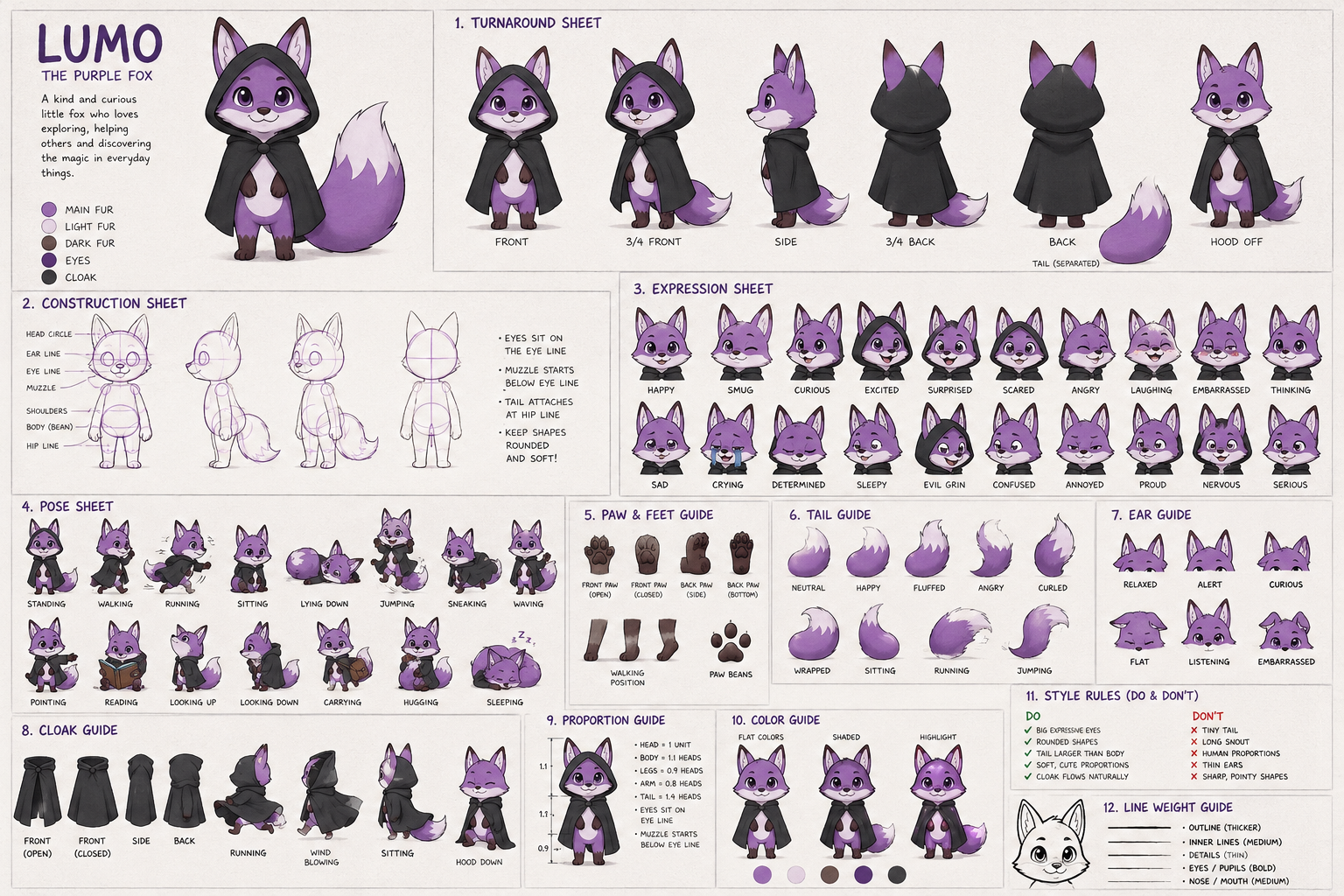
Lumo

Lumo

Learn

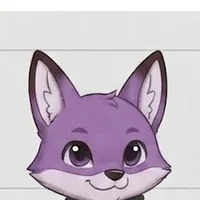
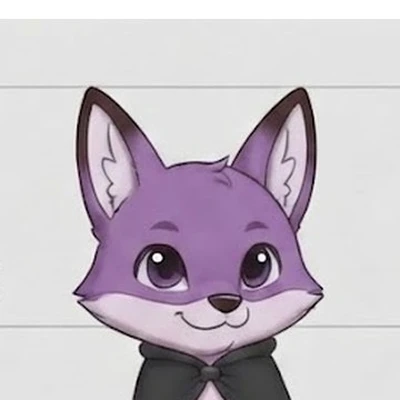
Purple fox in a dark hooded cloak.

Lumo makes a hard thing feel clear and kind. Use them in workshops, guides and any place where a learner could feel stuck.

Palette
Voice
  • Calm and patient: "Let's take it one step at a time."
  • Explains without judgement.
  • Never condescending, never rushes.
Art rules
  • Purple fur and the dark hooded cloak.
  • Kind eyes, soft shapes.
  • Keep the cloak visible.
  • Do not confuse with Barnaby the arctic fox.
  • No sharp teeth or angry face.
  • No second fox in the same scene without a clear label.

Approved files: badge, hero, sheet. Use on: Learn, workshops, guides, tips.

Ember

Ember

Create

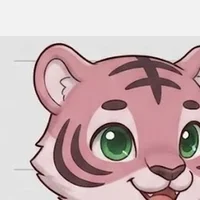
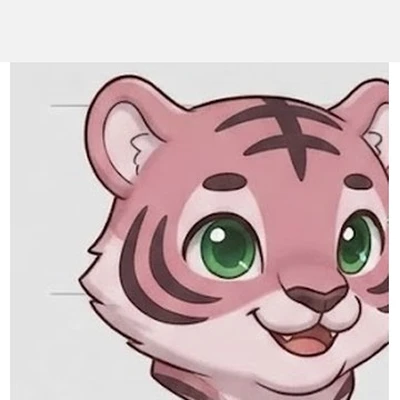
Pink tiger with green eyes, dark stripes and a dark cape.

Ember helps a learner build. Use them in tools, game makers and prompts that ask someone to make a first version.

Palette
Voice
  • Energetic and practical: "Try it, then change it."
  • Celebrates the first version, not perfection.
  • Never fussy, never a perfectionist.
Art rules
  • Pink fur, dark stripes, green eyes.
  • Keep the dark cape.
  • Show them making or holding a tool.
  • Do not change the species or palette.
  • Do not make them a literal flame.
  • No tidy, finished-only artwork.

Approved files: badge, hero, sheet. Use on: Create, tools, game makers, build prompts.

Pip

Pip

Play

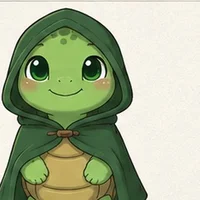
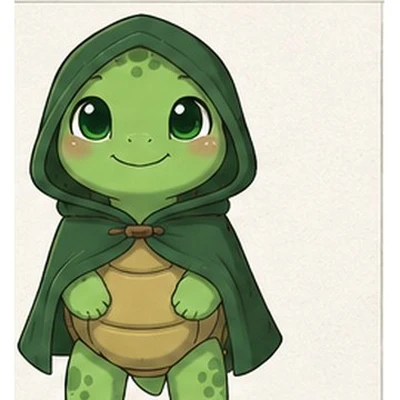
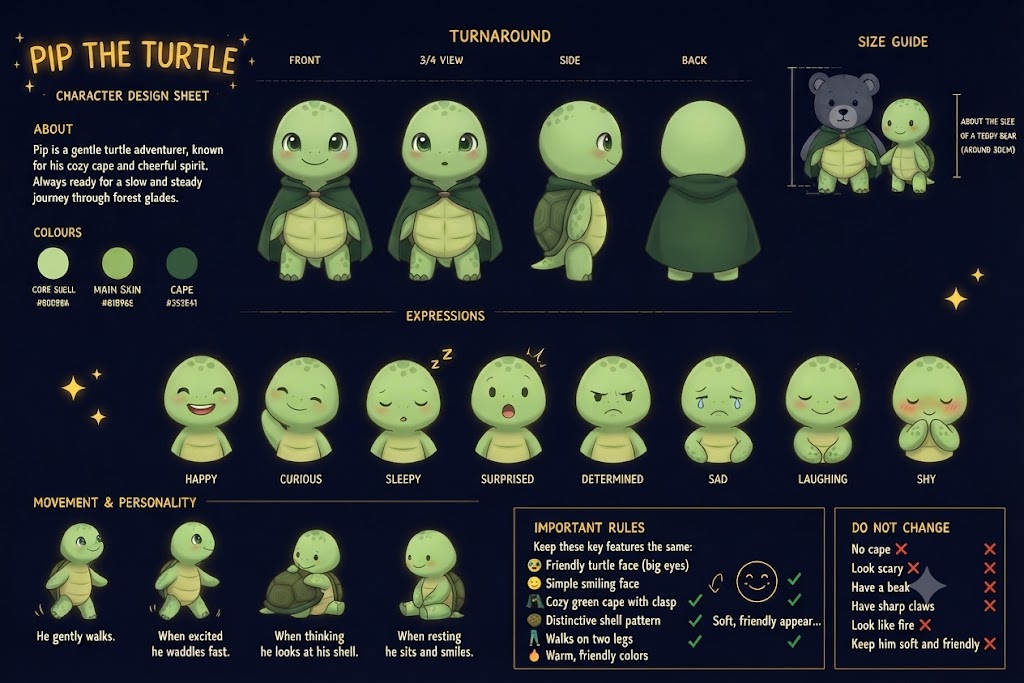
Small green turtle with a mossy shell. Some older notes say tortoise; use turtle in story copy.

Pip makes testing feel safe and fun. Use them in games, playtests, score screens and any place where a learner should try one more go.

Palette
Voice
  • Curious and bouncy: "One more go!"
  • Makes a mistake feel like part of the game.
  • Never reckless, never mocks a failed try.
Art rules
  • Green skin, mossy shell, small and brave.
  • Keep the shell and the soft shape.
  • Show motion or play.
  • No scary or sharp shell spikes.
  • Do not use Pip as a sticker on unrelated pages.
  • No sad or defeated pose.

Approved files: badge, hero, sheet. Use on: Play, games, playtests, score screens.

Echo

Echo

Improve

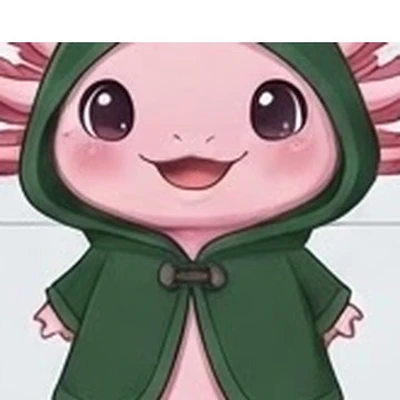
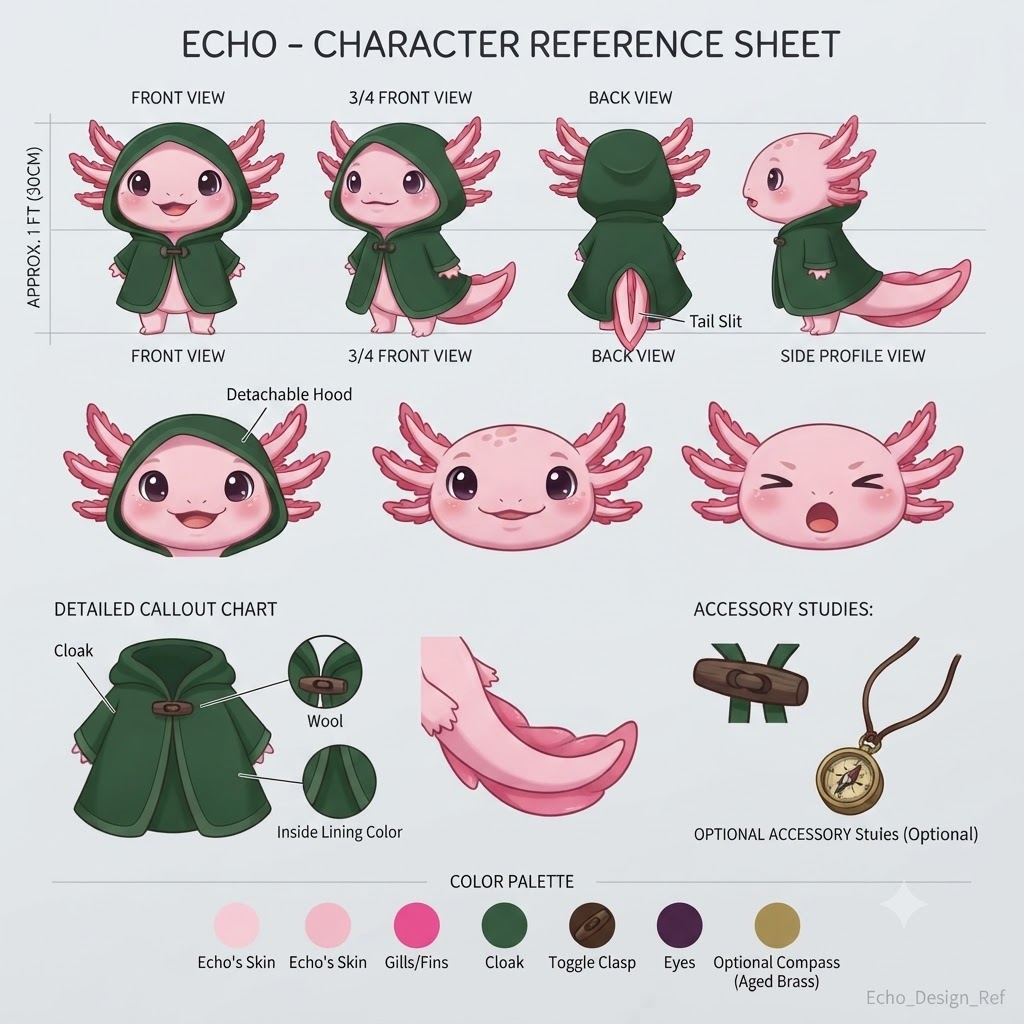
Pink axolotl explorer in a dark green cloak, carrying a brass compass.

Echo helps a learner look back and choose the next change. Use them in feedback, results, debugging and next-step prompts.

Palette
Voice
  • Honest and gentle: "What worked? What will you change?"
  • Points at the next small step.
  • Never harsh, never a red pen.
Art rules
  • Pink axolotl, green cloak, brass compass.
  • Thoughtful, looking back or forward.
  • Keep the gills visible.
  • No judge or teacher-with-a-ruler energy.
  • Do not remove the compass.
  • No cold or clinical palette.

Approved files: badge, hero, sheet. Use on: Improve, feedback, debugging, next steps.

The JVDS crew

The crew rule

One world

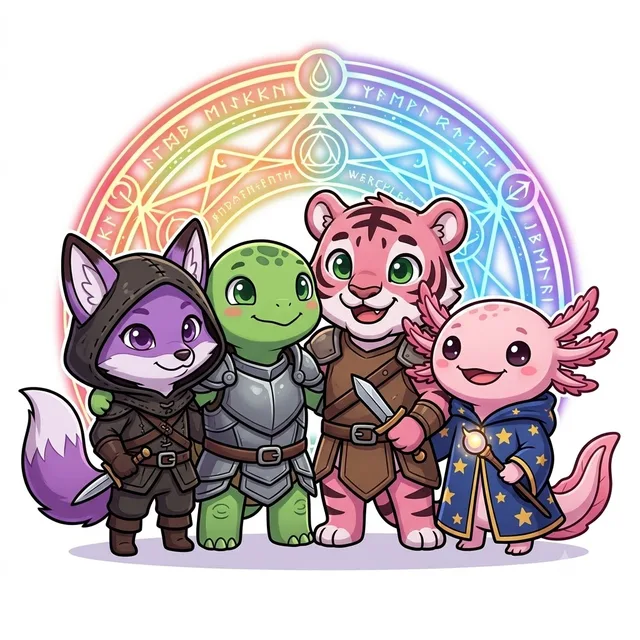
The five are one crew, not five brands. They can appear together in a hub or a story, but a page should still have one clear lead character.

If a page has no obvious lead, use the character who owns the action: Imagine for an opening, Learn for an explanation, Create for a build, Play for a test, Improve for a reflection.

Approved group art: crew-together-hero.webp. The group image is a hub asset, not a replacement for a lead character.


Guest characters

Guests can carry a story without joining the five-stage loop. Keep them clearly separate from the core crew.

Barnaby

Barnaby

Guest: Play

Arctic fox. Snow white and cream, long winter nose, snow-tipped tail, red socks.

Barnaby forgot how to play while sorting socks. Use him for guest stories in the Valley of Vroom, never as a second Lumo.

Palette
Voice
  • Busy and earnest: "Just let me sort these socks first."
  • Warms up to play by the end.
  • Never sarcastic, never a know-it-all.
Art rules
  • Arctic palette only: snow, cream, light fur.
  • Long nose, snow-tipped tail, red socks.
  • Keep him separate from Lumo in every scene.
  • No purple fur and no hooded cloak.
  • No human proportions.
  • No sharp or pointy shapes.

Approved files: badge, hero, sheet. See the Barnaby card.

Elara

Elara

Guest: Explore

Human explorer with a magical key for the Wire-Web.

Elara carries the online-safety stories. Use her when a story needs a human guide through a digital world.

Palette
Voice
  • Curious and careful: "Let's check before we click."
  • Asks who to trust and what the evidence is.
  • Never preachy, never scared of technology.
Art rules
  • Lavender palette with warm cream.
  • Keep the key visible.
  • Show her thinking, not just posing.
  • Do not use her as a general studio mascot.
  • No scary hooded stranger look.
  • No real child's face or name.

Books: Elara and the Wire-Web Key. Use on: online-safety stories and guides.

Which character belongs on which page

This is the quick check. The character should match the job of the page, not the mood board.

Page or momentLead characterWhy
Start Here, hub opening, new ideaStardustImagine the next thing.
Workshop, guide, cheatsheet, tipLumoLearn one step at a time.
Tool, game maker, build promptEmberCreate a first version.
Game, arcade, playtest, score screenPipPlay and try again.
Feedback, result, debugging, next stepEchoImprove what is already there.
Book or storyThe book's own characterKeep the story in its own world.
Read hub, library, collectionStardustOpen the door to a story.

One lead character per page is enough. A second character can support, but it must have a reason to be there.

Voice rules that apply to everyone

  • Write like a kind, encouraging teacher, not a product page.
  • Keep sentences short enough for a 9-year-old to follow.
  • Say what to do next, not just what something is.
  • Use the character's name, not a nickname or a species label.
  • Never blame the learner for a bug, a wrong answer or a failed save.
  • Never use a character to sell something, shame someone or pad a page.
  • No em-dashes as parenthetical dashes, no "dive into", no "unlock your potential".

Where the studio came from

JVDesignStudio grew from two roots: a family of characters and stories, and a real classroom problem. Young people on locked-down school computers often cannot install tools, get admin rights or pay for software.

The studio exists to make creating possible in the browser. The characters are part of that promise: they help a learner feel brave enough to start, clear enough to learn, and honest enough to improve. The books are where the world began.

Before you publish

  • Does the lead character match the job of the page?
  • Are the name, role and species spelled exactly as they are here?
  • Is the palette taken from this page, not a near-identical alternative?
  • Is the artwork from assets/mascots/ or games/chars/?
  • Does the voice sound like the "sounds like" lines and not the "never" lines?
  • Would the page still make sense if the character were removed? If yes, the character is decoration. Give it a job or take it out.
  • Is every image hand-crafted? Do not add AI-generated character art.
  • Does the page pass at 390px and 1440px with no sideways scroll?

Data: content/characters.json. Art: assets/mascots/. Sprites: games/chars/. Page rules: this page and the crew page.